An overview of the services you offer and how they will benefit the visitor.
The first contact takes place in a calm, relaxed atmosphere. No procedures are carried out at this stage. We discuss your wishes and concerns and examine your teeth carefully – if you prefer, this can also wait until a follow-up appointment.
Before the procedure, you'll discuss your state of health with our experienced anesthesiologist. He'll explain exactly how the anesthesia works, which medications are used, and how to prepare optimally (e.g. fasting before the appointment).
You'll drift gently off to sleep before the dental team begins the actual work. Throughout the entire treatment, the anesthesiologist continuously monitors your vital signs (pulse, blood pressure, oxygen level). The dental team carries out all agreed steps calmly and with the utmost precision.
After the procedure, you'll wake up calmly in the recovery room. After a short recovery period and a final check, you can return home accompanied by a caregiver.
Yes. Thanks to modern anesthetics and continuous monitoring by a specialized anesthesia team, general anesthesia is now considered extremely safe and well tolerated.
While you're still asleep, the anesthesiologist administers long-lasting pain medication as well as local anesthesia in the mouth. When you wake up, you're generally pain-free. For the following days, you'll be given a matched prescription for pain relief.
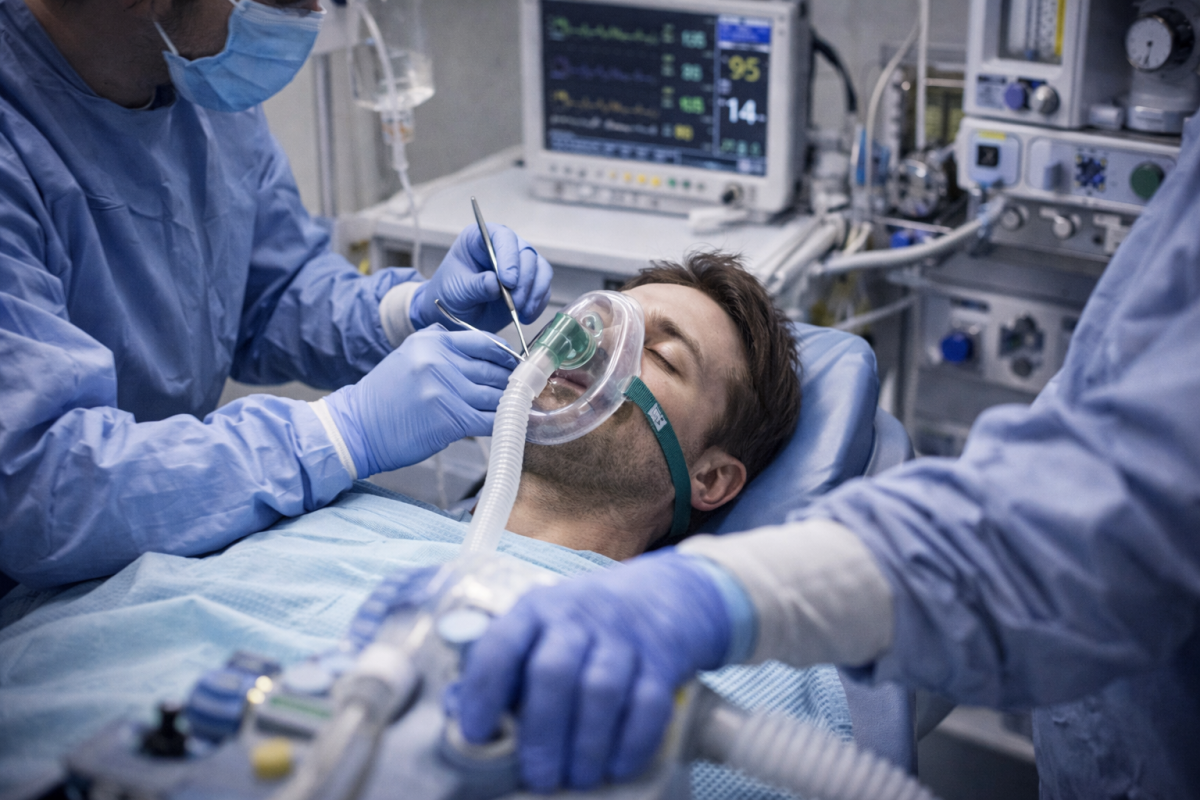
Admitting your own fear is the most important step. With us, it's not just your dental health that's at the center of attention, but you as a person. We don't judge how long it's been since your last dental visit – we help you find your way back to a smile free of discomfort.
Patients with severe dental phobia: when the barrier to a normal dental visit feels insurmountable.
Extensive full-mouth restorations: when several teeth need to be treated, extracted, or fitted with implants in a single session.
Severe gag reflex: when even touching the oral cavity with instruments triggers a disruptive reflex.
Patients with physical or mental impairments: when maintaining a calm position in the treatment chair for an extended period is difficult.